
Service Hotline : +86 17715265446

E-mail : yangf@cnguibao.com


GX-137
SiLaneTMSilane coupling agent GX-137
Part I: Technical specifications of chemicals
1. Chemical name:
n-octyl triethoxysilane
2. Molecular formula:
CH3(CH2)7Si(OC2H5)3
3. Molecular structure:

4 、 CAS NO.:
2943-75-1
5. Corresponding brand:
A-137-Z-6341-OCTEO-S301
6. Characteristics:
·Increased hydrophobicity
·Improve dispersion and compatibility
· Improve affinity and wettability
7. Application:
·Building waterproofing agent, protective agent
·inorganic filler surface treatment agent
·pigment dispersant
8. Typical Physical Properties
| Parameters |
Unit |
standard index |
| Appearance |
|
Colorless to slightly yellow transparent liquid |
| Color |
Pt-Co |
≤ 30 |
| Density |
(P 20 g/cm3) |
0.872~0.882 |
| Refractive rate |
(nD 25°C) |
1.409~1.419 |
| Purity |
% |
≥ 98.0 |
9. Application Information
1, used as building waterproofing agent, protective agent, applied to the surface of inorganic materials such as concrete and cement, forming a hydrophobic layer on the surface of the substrate, play the role of waterproof and promote the release of water from concrete or cement, can effectively prevent water seepage, sun, acid and alkali erosion, prolong the service life of the building;
2, used as a surface treatment agent for inorganic fillers such as titanium dioxide to improve the dispersion and compatibility of fillers in plastics, rubber and resins, and to improve the affinity and wettability of base resins such as coatings, adhesives and sealants;
3, used as a pigment dispersant, so that the treated pigment has better dispersion.
10. Safety Information
This document does not include safety information required for the safe use of this product. Before operation, please read the product and its safety data sheet and the container label to obtain information about the safe use of the product and the hazards to body, environment and health.
11. Validity Period and Storage
Sealed and stored in a cool, dry and ventilated place, moisture-proof and waterproof, away from kindling, heat source and light source. Under the above conditions, the storage period is six months.
12. Packaging
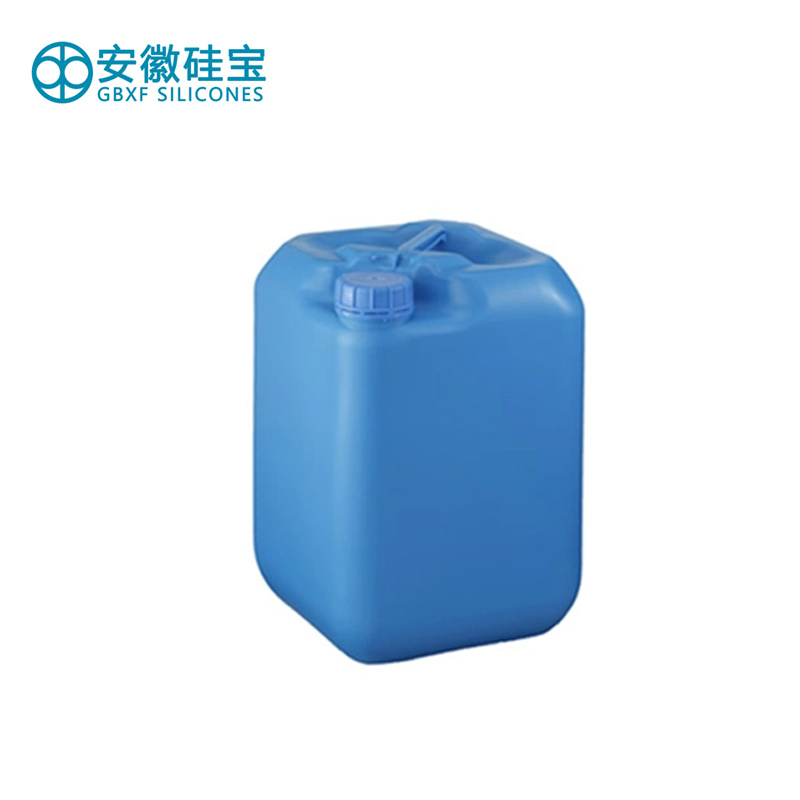
Finished products shall be packed in plastic drums, iron drums or iron-plastic drums, with net weight of 5Kg, 25Kg, 200Kg or 1000Kg per barrel. Special specifications shall be reserved.
13. Limited Warranty Information-PLEASE READ CAREFULLY
The information provided herein shall be deemed to be accurate on the basis of good faith. However, the conditions and methods of using our products are beyond our control. This information is not a substitute for customer testing to ensure that our products are safe, effective and fully satisfactory for a particular end use. This manual only describes the use of the product, and the actual application effect needs to be suitable for various application systems. The advice we provide shall not be considered as a cause of infringement of any patent rights.
Part II: Technical Specifications for Chemical Safety
Prepared in accordance with GB/T 16483 and GB/T 17519
1. Identification number of the substance
Product Details
Name of commodity: n-octyl triethoxysilane
English Name: Triethoxyoctylsilane
Commodity Number:GX-137
Manufacturer: Anhui Sibao Organic Silicon New Material Co., Ltd
Enterprise Address: Wujiang Town Fine Chemical Base, He County, Ma'anshan City, Anhui Province
Sales Phone:025-58494046
Fax:025-58742173
Emergency telephone:0555-5963308(8:30-17;00)
Website:www.gbxfsilicones.com
Version:2.0
First Edition Time: April 7, 2017
Revision time: May 24, 2021
Information on emergency response: Department of Environment, Health and Safety.
Product recommend and Restricted Use:Industrial use only.
2. Hazard Overview
Emergency Overview
| Appearance and Character | Liquid |
| Color | Colorless |
| Smell | No data |
GHS Hazard Categories:Skin Corrosion/Irritation Category 2
3. Ingredient/composition information
Substance/mixture: Substance
Chemical name: n-octyl triethoxysilane
Concentration Range: ≥ 98%(GC)
CAS No.:2943-75-1
4. First-aid measures
Inhalation: If inhaled, move to fresh air. If skin irritation occurs: Get medical attention.
Skin contact: Wash thoroughly with water. If symptoms occur, seek medical advice.
Eye contact: Rinse carefully with water for a few minutes. If contact lenses are worn and can be easily removed, remove the contact lenses. Continue flushing.
Ingestion: such as swallowing: do not vomit. Gargle thoroughly with water.
Most Important Symptoms and Health Effects: Not reported.
Advice for Protecting RescuersFor first responders, no specific precautions are required.
Special tips for doctors: symptomatic adjuvant therapy.
5. Fire protection measures
Fire extinguishing method and extinguishing agent: Water spray, alcohol-resistant foam, carbon dioxide (CO2) or chemical dry powder.
Unsuitable extinguishing agent: Not reported.
particularly dangerous: Exposure to combustion products may be hazardous to health.
harmful combustion productsCarbon oxide, silicon oxide and formaldehyde.
special fire extinguishing method:
Appropriate fire extinguishing measures shall be adopted according to the current situation and surrounding environment.
Spray water to cool unopened containers.
When safe, remove undamaged containers.
Evacuate the site.
Special Protective Equipment for Firefighters:
Wear self-contained breathing apparatus for fire fighting if necessary.
Use personal protective equipment.
6. Emergency measures for leakage
Personnel protective measures, protective equipment and emergency treatment procedures:
Follow safe disposal recommendations and PPE recommendations.
Environmental protection measures:
Avoid discharge into the surrounding environment.
If safety can be ensured, measures can be taken to prevent further leakage or spillage.
Prevent wide spread (e. g. with surrounding or oil fences).
Contain and dispose of contaminated wash water.
If a serious spill cannot be contained, local authorities should be notified.
Methods of containment and removal of spilled chemicals and disposal materials used:
Absorbed with inert material.
In the case of large spills, containment or other appropriate leak-proof measures shall be taken to prevent material diffusion.
If the contained material can be pumped out, the recovered material shall be stored in a suitable container.
Remove residual spill material with a suitable absorbent.
Local or national regulations may apply to the release and disposal of such materials, as well as materials and articles used in cleaning up emissions. You need to determine the applicable regulations for yourself.
Parts 13 and 15 of this SDS give information about specific local or national requirements.
7. Operation, Disposal and Storage
Operation processing
Technical measures: See Engineering Controls in Section 8.
Local or general ventilation: Use only under adequate ventilation
Safety Handling Precautions:
Operate in accordance with good industrial hygiene and safety practices.
Do not come into contact with water. Moisture-proof.
Care should be taken to prevent spillage, waste and, to the extent possible, discharge into the environment.
Storage
Arrange storage conditions:
Store in properly marked containers.
Store in accordance with specific national regulations.
Packaging Materials: Unsuitable materials: Not reported.
8. Exposure control and personal protection
Hazard composition and occupational exposure limits:Substances that do not contain occupational exposure limits.
Occupational exposure limits for decomposition products:
Engineering Control:
Ensure adequate ventilation, especially in enclosed areas.
Reduce workplace exposure as much as possible.
Personal protective equipment:
Respiratory system protection: Use respiratory protection unless adequate local exhaust ventilation or exposure assessment demonstrates that the exposure level is within the recommended exposure guidelines.
Filter TypeOrganic gases and low-boiling vapor types
Eye surface protection: Wear safety glasses
Skin and body protection: Wash off after skin contact.
Hand protection: Wash hands before rest and at the end of work.
Hygiene measures:
Make sure the eyewash and safety shower are located near the workplace.
When using, diet and smoking are strictly prohibited.
Contaminated clothes can be reused after washing.
The above precautions are only for room temperature operation, and additional precautions may be required for heat use or aerosol/spray application.
For further information on the use of silicones/organic oils in consumer product aerosols, please refer to the Silicone Industry Guidelines for the Use of Such Materials in Consumer Product Aerosol Applications (www.SEHSC.com).
9. Physical and chemical characteristics:
| Appearance and properties: liquid | Vapor pressure: no data available |
| Color: Colorless to light yellow | Vapor density: no data |
| Odor: No data | Density/relative density: 0.877 |
| Odor threshold: no data available | Solubility |
| PH value: no data | Water solubility: no data |
| Melting point/freezing point:-75 ℃(lit.) | n-Octanol/water partition coefficient: No data available |
| Initial boiling point and boiling range: no data available | Self-ignition temperature: no data |
| Flash point: 100 ℃ (closed cup) | Decomposition temperature: no data |
| Evaporation rate: no data | Kinematic viscosity: no data |
| Flammability (solid, gas): Not applicable | Explosive characteristics: non-explosive |
| Upper explosion limit: no data | Oxidizing: No data available |
| Lower explosive limit: no data |
Chemical name: n-octyl triethoxysilane
Molecular formula:C14H32O3Si
molecular weight:276.49
10, Stability and Reactivity
Reactivity: Not classified as a reactive hazard
Stability: Storage and use at normal ambient temperature, this product is stable.
Hazardous reactionNormal processing does not occur.
Conditions to be avoided: heat, humidity, etc.
ForbiddenStrong oxidant, strong acid, strong alkali.
Dangerous decomposition products
thermal decompositionOxides of carbon, oxides of nitrogen, SiO2
11, Toxicological Information
Pathway of exposureInhalation, skin contact, ingestion, eye contact
acute toxicity:
Skin corrosion/irritation:
Severe eye damage/eye irritation:
Respiratory or skin allergies:
germ cell mutagenicity: No data.
Carcinogenicity: No data.
reproductive toxicity: No data.
Specific Target Organ Systemic Toxicity-One Exposure: No data.
Specific target organ systemic toxicity-repeated exposure: No data.
Inhalation hazard: No data.
12, Ecological Information
Eco-toxicity: No data
Persistence and degradability: No data
potential bioaccumulation: No data
mobility in soil: No data
Other harmful environmental effects: No data
13. Disposal
Disposal method
Residual waste: Handle according to local regulations.
Contaminated packaging: Empty containers should be sent to a permitted waste disposal site for recycling or disposal.
14. Transportation Information
International regulations
Land transportation (UNRTDG): Not as dangerous goods management
Air (IATA-DGR): Not as dangerous goods management
Sea (IMDG-Code): Not as dangerous goods management
Domestic regulations
GB 6944/12268: Not as dangerous goods management
15. Regulatory Information
Applicable regulations
List information of product ingredients in the following list:
the People's Republic of China occupational disease prevention law:
Classification Catalogue of Occupational Hazards (2015):Not included
dangerous chemicals safety management regulations:
Catalogue of Dangerous Goods Chemicals (2015):Not included
List of Explosive Hazardous Chemicals (2017):Not included
List of hazardous chemicals under key supervision:
List of the first batch and the second batch of hazardous chemicals under key supervision:Not included
Measures for the Registration of Environmental Management of Hazardous Chemicals (for Trial Implementation):
Catalogue of hazardous chemicals for key environmental management:Not included
Regulations on the Administration of Narcotic Drugs and Psychotropic Drugs:
varieties of narcotic drugs directory:Not included
varieties of psychotropic drugs directory:Not included
new chemical substances environmental management approach:List of Existing Chemical Substances in China (2013): Included.
16 Other Information
Further information
References: Internal technical data, data from raw materials SDS\OECD eChem portal search results, as well as the European Chemicals Agency, http://echa.europa.eu/
Version:2.0
First Edition Time: April 7, 2019
Revision time: May 24, 2021
Reason for revision: SDS standardized management
To the best of our knowledge and belief, the information provided in this SDS as of the date of publication is accurate. This information is intended only as a guide for safe operation, use, processing, storage, transportation, disposal and distribution and does not represent a warranty or quality statement of any kind. Except as specified in the text, the information provided in this table relates only to the specific materials identified at the top of this SDS, and the information in this table will not be valid when the materials in the SDS are mixed with any other materials or used in any process. The user of the material should review information and recommendations related to the operation, use, processing and storage methods required in the specific environment, including the suitability assessment of the user's final product SDS material (if used)
Previous
GX-104
Next
Service Hotline:
Sales Hotline:
E-mail :
WhatsApp :
Skype:
Quick Navigation
Online Message
If you have any product related questions, please feel free to contact us!
Copyright © 2024 GBXF Silicones Co., Ltd. All Rights Reserved. Business license
